In today’s world, businesses are increasingly recognising the importance of sustainable practices, not only to reduce operational costs but also to protect the environment. Water is one of the most vital resources, and how businesses source and manage it can significantly impact their environmental footprint. One of the most effective ways for companies to ensure clean, safe, and sustainable water use is through a commercial reverse osmosis system. This technology offers numerous environmental benefits that make it a smart choice for any business aiming to reduce waste and promote eco-friendly operations.
Understanding Reverse Osmosis and Its Role in Sustainability
Reverse osmosis (RO) is a water purification process that removes contaminants, impurities, and dissolved solids from water by forcing it through a semi-permeable membrane. While residential RO systems are common in homes for drinking water, commercial RO systems are designed for larger-scale applications where significant volumes of purified water are needed.
By filtering out pollutants and harmful substances, these systems provide businesses with a consistent supply of high-quality water without relying on bottled or chemically treated sources. The environmental advantages arise from reducing plastic waste, lowering energy use compared to other purification methods, and conserving water in the long run.
Reducing Plastic Waste Through On-Site Water Purification
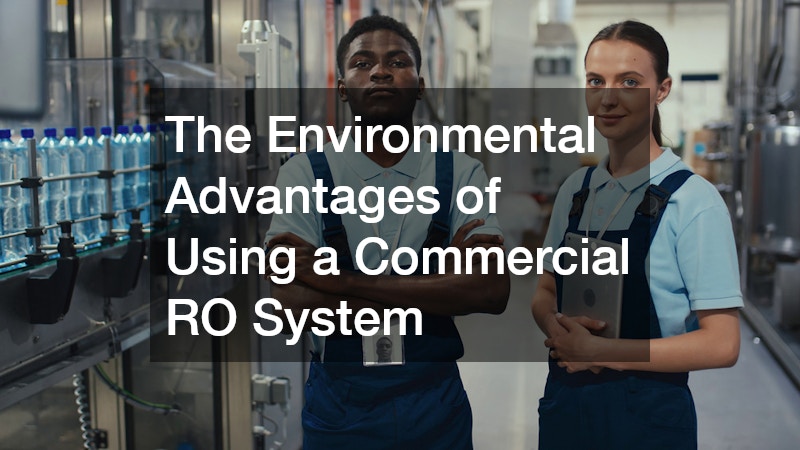
One of the most visible environmental impacts of using a commercial RO system is the reduction in plastic waste. Many businesses and industries rely heavily on bottled water for their daily operations or for providing clean drinking water to employees and customers. This reliance contributes to the global problem of plastic pollution, with millions of plastic bottles ending up in landfills and oceans each year.
A commercial RO system eliminates the need for bottled water by providing purified water directly on-site. This drastically cuts down on the use of single-use plastics, aligning with sustainable business practices and reducing the environmental burden associated with plastic manufacturing, transportation, and disposal. By switching to a commercial RO system, companies can significantly reduce their plastic footprint, helping preserve ecosystems and wildlife affected by plastic pollution.
Conserving Water and Improving Efficiency
At first glance, water purification systems may seem like they use a lot of water, and traditional RO systems can produce some wastewater. However, modern commercial RO systems have become much more efficient over the years. Many are now designed to minimize water wastage through advanced membrane technology and smart recovery systems that recycle water during the purification process.
Compared to older or less efficient water treatment methods, a commercial RO system conserves a greater amount of water by ensuring maximum recovery of clean water and minimizing reject water. This not only benefits the environment by reducing water waste but also supports businesses in regions where water scarcity is a growing concern. Implementing an efficient RO system is an important step towards responsible water management, helping to preserve this precious resource for future generations.
Lowering Energy Consumption and Carbon Footprint
Energy consumption is a major environmental consideration for any industrial or commercial system. Many water purification processes, such as distillation or chemical treatment, can be energy-intensive and contribute to a higher carbon footprint. Commercial RO systems, by contrast, typically require less energy to operate, especially when designed with energy efficiency in mind.
By reducing the energy needed to produce clean water, businesses can lower their overall carbon emissions. This is particularly significant for companies aiming to meet sustainability goals or comply with environmental regulations. In addition to operational energy savings, cutting down on bottled water use also reduces the emissions associated with plastic bottle production and transportation. Together, these factors make commercial RO systems a greener alternative in the pursuit of sustainable business practices.
Supporting Sustainable Agriculture and Industrial Practices
Water quality is critical in many commercial sectors, including agriculture, food processing, and manufacturing. Poor water quality can lead to decreased product quality, increased waste, and higher operational costs. By integrating a commercial RO system, businesses can ensure that their water supply is clean and free of contaminants, promoting healthier crops, safer food products, and more efficient industrial processes.
From an environmental perspective, better water quality means less reliance on chemical additives or treatments that can harm ecosystems if discharged improperly. Furthermore, purified water can reduce the risk of soil degradation and pollution from runoff, making commercial RO systems an essential tool in promoting sustainable agricultural and industrial practices. This approach helps businesses meet environmental standards while contributing to the broader goal of ecological preservation.
Incorporating a commercial RO system into your business operations is more than just a way to secure clean water — it’s a commitment to environmental stewardship. The benefits of reducing plastic waste, conserving water, lowering energy consumption, and supporting sustainable industrial practices all contribute to a healthier planet. As more companies adopt eco-friendly technologies, the commercial RO system stands out as a practical and impactful solution.
Choosing this technology not only meets immediate business needs but also aligns with long-term sustainability goals, helping companies operate responsibly in an increasingly resource-conscious world. For any business looking to reduce its environmental footprint while improving water quality and efficiency, a commercial RO system is a smart, forward-thinking investment.